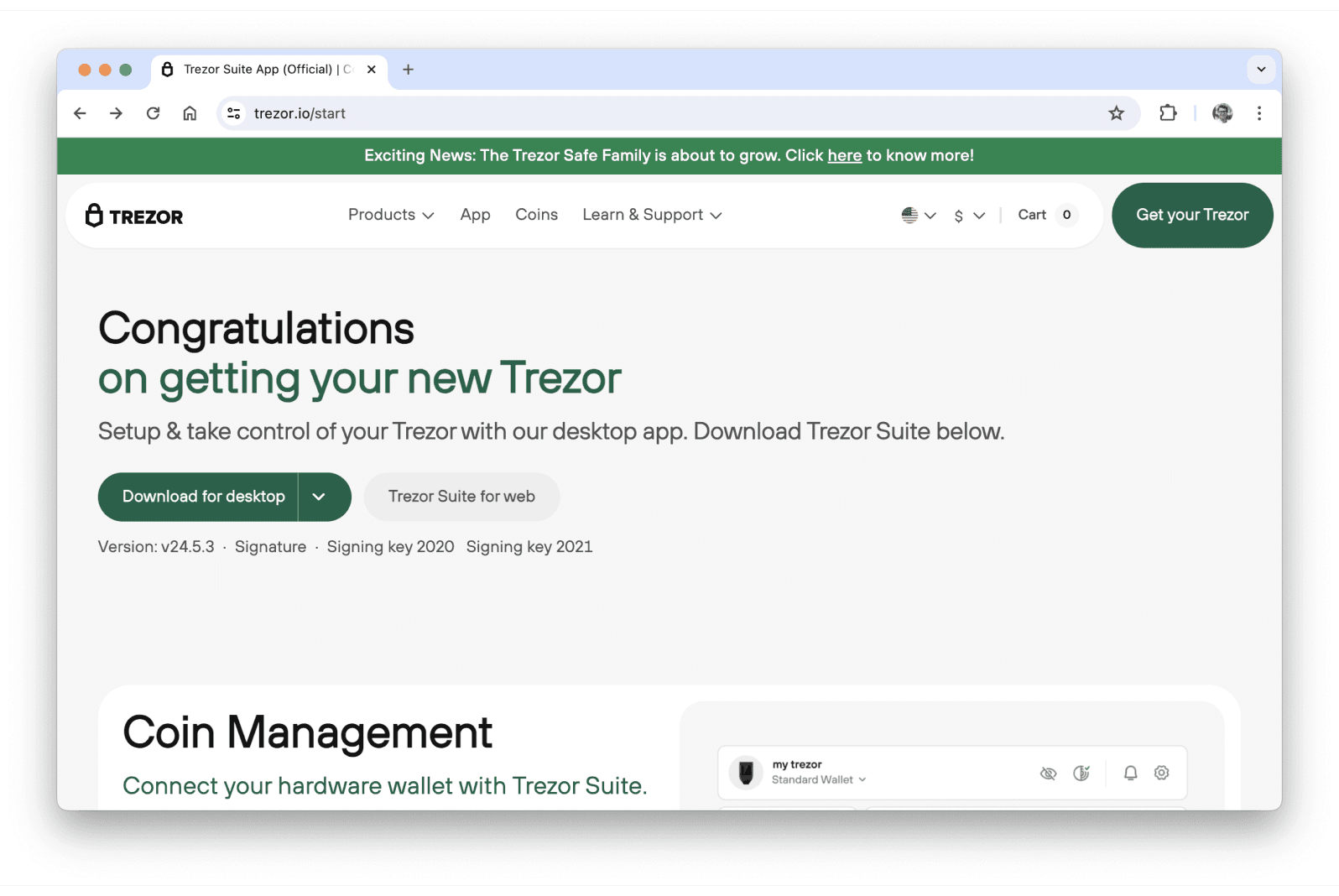
Trezor.io/start: Building a Secure Foundation for Cryptocurrency Ownership
Cryptocurrency represents a shift in how value is owned and transferred. Instead of trusting banks or third parties, users become their own custodians. While this brings freedom and control, it also introduces responsibility. If security is neglected, digital assets can be lost forever. This is where hardware wallets come into play, and for Trezor users, everything begins at Trezor.io/start.
Trezor.io/start is the official setup gateway that ensures your Trezor hardware wallet is initialized in a safe, verified, and user-controlled environment. This guide explains the purpose of Trezor.io/start, how it works, and why it is essential for anyone serious about long-term crypto security.
What Is Trezor.io/start?
Trezor.io/start is the official setup page provided by Trezor, a hardware wallet manufacturer developed by SatoshiLabs. The page exists to guide users through the correct and secure initialization of a Trezor device.
Instead of shipping wallets with pre-installed firmware or pre-generated keys, Trezor requires users to complete the setup themselves. Trezor.io/start ensures that this process happens safely and transparently, without interference from malicious software or fake instructions.
Why Trezor.io/start Exists
The most dangerous moment in a hardware wallet’s life is the first setup. This is when private keys and recovery phrases are created. If this process is compromised, the wallet is no longer secure.
Trezor.io/start exists to:
Prevent phishing attacks during setup
Ensure firmware authenticity
Guarantee offline key generation
Educate users on security best practices
By using a single, official starting point, Trezor minimizes the risk of user error and fraud.
How Trezor Hardware Wallets Protect Crypto
A Trezor hardware wallet does not store cryptocurrency directly. Instead, it stores private keys, which authorize transactions on the blockchain. These keys never leave the device.
Security Design Highlights
Offline private key storage
Internal transaction signing
Manual approval on the device
Protection from malware and keyloggers
Even if the connected computer is infected, the hardware wallet remains secure.
Devices Supported at Trezor.io/start
Trezor.io/start supports all official Trezor hardware wallets.
Supported Models
Trezor Model One – Minimalist, reliable, beginner-friendly
Trezor Model T – Touchscreen-based, advanced usability
The setup logic remains consistent across models, ensuring the same security standards.
The Role of Trezor Suite
During the setup process, Trezor.io/start guides users to install Trezor Suite, the official wallet management application.
What Trezor Suite Is Used For
Viewing account balances
Sending and receiving crypto
Managing multiple wallets
Configuring security options
Installing firmware updates
Trezor Suite acts as the interface, while the hardware wallet acts as the secure vault.
Step-by-Step Overview of Trezor.io/start
Step 1: Visit Trezor.io/start
Always type the address manually to avoid phishing websites.
Step 2: Select Your Trezor Device
Choose your specific model to receive accurate instructions.
Step 3: Download Trezor Suite
Install the official desktop application for your operating system.
Step 4: Connect the Trezor Device
Plug the device into your computer using the supplied USB cable.
Step 5: Install Firmware
Firmware installation activates the device and verifies its authenticity.
Step 6: Create or Recover a Wallet
Choose to generate a new wallet or restore one using an existing recovery phrase.
Step 7: Secure the Recovery Phrase
Write down the recovery phrase offline and store it safely.
Why Firmware Is Installed During Setup
Trezor devices are intentionally shipped without active firmware. This ensures that no one—including manufacturers or distributors—can access the device before the user.
Benefits of Firmware Installation
Confirms device authenticity
Prevents pre-installed malware
Activates security features
Adds cryptocurrency support
Firmware should only be installed through Trezor Suite accessed via Trezor.io/start.
Understanding the Recovery Phrase
The recovery phrase is a sequence of words generated by the device during wallet creation. It represents full control over your crypto assets.
What the Recovery Phrase Can Do
Restore access if the device is lost
Recover funds after damage or theft
Transfer wallets to a new device
Critical Safety Rules
Never store it digitally
Never share it with anyone
Never type it into websites
Never take photos or screenshots
Trezor.io/start ensures the phrase is generated offline, directly on the device.
How Trezor.io/start Prevents Scams
Crypto scams often target new users during setup. Trezor.io/start is designed to eliminate these threats.
Security-First Design
No account creation
No email or password required
No online recovery phrase input
All confirmations happen on the device
Any request for your recovery phrase outside the device is a scam.
Cryptocurrencies Supported After Setup
Once setup is complete, Trezor supports thousands of cryptocurrencies and tokens.
Commonly Supported Assets
Bitcoin (BTC)
Ethereum (ETH)
Litecoin (LTC)
Cardano (ADA)
Solana (SOL)
Polkadot (DOT)
ERC-20 and other tokens
Asset availability depends on the device model and firmware version.
Trezor.io/start vs Centralized Wallet Setup
FeatureTrezor.io/startCentralized WalletKey OwnershipUserPlatformOnline ExposureMinimalHighRecovery ControlUser-onlyProviderAccount FreezingImpossiblePossible
Trezor.io/start ensures true self-custody from the beginning.
Common Setup Errors to Avoid
Using Search Engine Ads
Fake ads can lead to malicious sites. Always type the URL manually.
Failing to Back Up the Recovery Phrase
Without it, funds are permanently lost if the device fails.
Saving the Phrase Digitally
Digital storage exposes the phrase to hackers and malware.
Skipping Firmware Updates
Outdated firmware may lack important security patches.
What Happens If a Trezor Device Is Lost?
The device itself is not the wallet—the recovery phrase is.
Recovery Steps
Buy a new Trezor device
Install Trezor Suite
Select “Recover wallet”
Enter the recovery phrase offline
Funds are restored exactly as before.
Privacy Benefits of Trezor.io/start
Trezor is designed with privacy in mind.
No Personal Data Required
No email address
No phone number
No identity verification
This approach supports anonymity and decentralization.
Using Your Wallet After Setup
After completing Trezor.io/start, users commonly:
Store long-term crypto holdings
Make verified transactions
Connect to DeFi platforms
Use third-party wallet integrations
Sign transactions securely offline
The hardware wallet becomes a permanent security layer.
Best Practices for Long-Term Security
Choose a Strong PIN
Avoid simple or predictable combinations.
Keep Firmware Updated
Updates improve both security and compatibility.
Protect the Recovery Phrase
Consider fireproof or metal backups.
Disconnect When Not in Use
Reduce physical exposure to risk.
Why Trezor.io/start Is Essential for Self-Custody
Self-custody means complete control, but also complete responsibility. Trezor.io/start ensures users begin this journey correctly, without shortcuts or hidden risks. It establishes a secure foundation that protects assets today and in the future.
Conclusion
Trezor.io/start is not just a setup page—it is the gateway to secure cryptocurrency ownership. By guiding users through verified firmware installation, offline key generation, and proper recovery phrase handling, it eliminates the most common causes of crypto loss.